Introduction
Some skincare ingredients earn attention through clever marketing. Fullerene earned it through the Nobel Prize in Chemistry. This remarkable molecule — a hollow sphere of 60 carbon atoms shaped like a miniature football — was first synthesized in 1985 and became one of the most studied materials in modern science.
Skincare was one of the first commercial fields to embrace it, and Japanese cosmetic laboratories pioneered its use in premium anti-aging and brightening products. Today, fullerene appears in high-end serums and masks worldwide. But what does it actually do, and does the science support the hype? Let's take a careful look.
What Is Fullerene?
Fullerene is a pure form of carbon, arranged in a perfectly symmetrical hollow cage of 60 atoms. Its discovery opened a new field of chemistry (the researchers received the 1996 Nobel Prize in Chemistry), and its unusual structure gives it unusual properties.
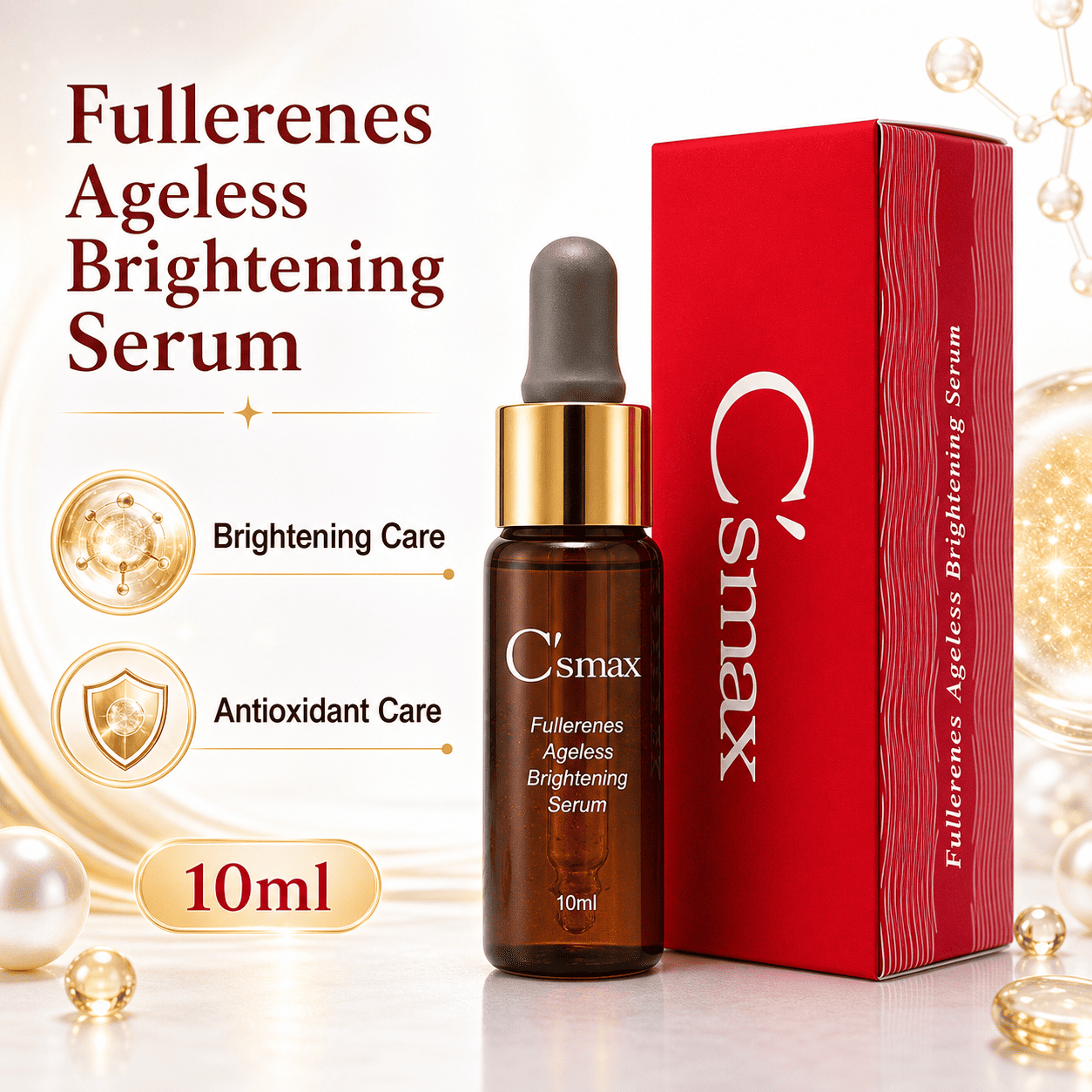
The property that matters for skincare is its behavior with free radicals — unstable molecules with unpaired electrons. Fullerene's cage structure can accept and hold unpaired electrons without itself becoming unstable. In chemistry terms, it acts as a highly efficient radical scavenger: it catches free radicals and holds them, neutralizing them in a way that does not create new reactive molecules.
Free Radicals and Your Skin: Why Antioxidants Matter
To understand why antioxidant ingredients matter, picture what a normal day does to your skin. UV radiation, air pollution, cigarette smoke, stress, and even normal metabolism generate free radicals in the skin.
Free radicals damage cells through a process called oxidative stress: they steal electrons from lipids, proteins, and DNA in skin cells. Over time, oxidative stress contributes to the visible signs we associate with skin aging — dullness, loss of firmness, uneven tone, and fine lines. It also aggravates irritation.
Your skin has its own antioxidant defenses, but daily life overwhelms them. This is why topical antioxidants are a cornerstone of modern skincare: they reinforce the skin's natural defenses. Vitamin C and vitamin E are the classics; fullerene is a newer, structurally unique addition to this family.
What Makes Fullerene Different
Many ingredients can neutralize free radicals. Fullerene's distinction is how it does it:
- Persistent action. Vitamin C sacrifices itself after neutralizing a limited number of radicals. Fullerene's cage structure allows it to keep scavenging without being consumed as quickly — laboratory studies have measured very high radical-capturing capacity per molecule compared with conventional antioxidants.
- Stability. Fullerene does not degrade easily in heat or light — a real advantage in Thailand's climate, where vitamin C products can oxidize within weeks of opening.
- Photostability under UV. Research indicates fullerene remains active under sun exposure, unlike some antioxidants that break down.
- Gentleness. It is generally well tolerated, with a low irritation profile, making it suitable for sensitive skin.
A note on precision: laboratory measurements of radical-scavenging power do not translate directly into guaranteed skin results. They tell us the molecule is a genuinely powerful antioxidant — what it does for your skin depends on the formula, the concentration, and the rest of your routine.
What the Research Suggests
Skincare studies on fullerene — including published clinical observations — have reported several potential cosmetic benefits:
- Brighter, more even-looking skin. By helping counter oxidative stress, fullerene-containing products have been associated with improvements in radiance and tone in cosmetic studies.
- Support for firmness and fine lines. Antioxidant protection is one pillar of any anti-aging approach; fullerene contributes this in a particularly stable form.
- Soothing feel. Some research suggests a calming effect on skin exposed to environmental stress, consistent with its radical-scavenging role.
These are cosmetic benefits — supportive, gradual, and realistic. Fullerene is not a treatment for any medical condition, and no antioxidant can undo years of damage on its own. Think of it as high-level reinforcement for a routine already built on sunscreen, hydration, and healthy habits.
How to Use Fullerene in Your Routine
Fullerene appears in serums, creams, and masks. Because it is stable and gentle, it fits easily into almost any routine:
Morning: Cleanse → toner → fullerene or vitamin C serum → moisturizer → sunscreen. (Some premium formulas combine fullerene with vitamin C to stabilize and complement it.)
Evening: Cleanse → toner → fullerene serum or mask → moisturizer.
Tips for choosing a product:
- Look for disclosed content. Reputable brands state fullerene concentration or content clearly.
- Prioritize water-soluble formulations. Raw fullerene does not dissolve in water; quality products use solubilized or encapsulated forms that disperse properly on skin.
- Dark packaging is a good sign of a brand that takes formulation stability seriously — even though fullerene itself is stable, its companion ingredients (like vitamin C) may not be.
Frequently Asked Questions
Is fullerene better than vitamin C?
They are different tools. Fullerene is far more stable and does not degrade in heat or light; vitamin C has decades of research on brightening benefits. Many premium products combine both. Stability makes fullerene especially practical in hot climates like Thailand.
Is the "172 times more powerful than vitamin C" claim real?
This figure comes from laboratory tests measuring radical-absorption capacity per molecule, not from head-to-head trials on skin. It indicates genuine antioxidant strength — but be cautious of brands presenting it as proof of guaranteed results.
Can fullerene replace sunscreen?
Absolutely not. Antioxidants and sunscreen do different jobs: sunscreen blocks UV, antioxidants deal with the damage UV and pollution cause. Use both.
Is fullerene safe for sensitive skin?
It is generally very well tolerated. As with any new product, patch test first, and check the full ingredient list for other potential irritants.
How long before I see results?
Antioxidant benefits are largely preventive and cumulative. Radiance and skin-feel improvements may appear within weeks; protection against future damage is the more meaningful long-term value.
Conclusion
Fullerene is one of the most scientifically fascinating ingredients in modern skincare: a Nobel-winning carbon molecule with a genuinely unique antioxidant mechanism, outstanding stability, and a gentle profile. For hot, sunny climates like Thailand — where delicate antioxidants degrade fast — that stability is not a luxury; it is practical chemistry.
Keep your expectations calibrated: it is a reinforcement, not a rescue. Pair it with daily sunscreen, hydration, and consistency, and it earns its place as the quiet workhorse of a premium routine.